
A call can make a DIFFERENCE
Home » 10 Clear Signs Your Parent Needs Full-Time Care
Getting to Know Us!
Company Information and Customer Policies
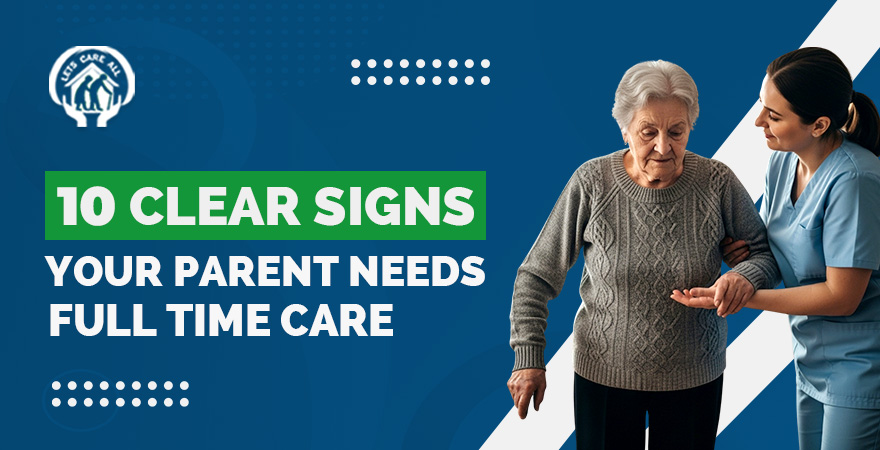
Are you starting to worry about whether your parent is still safe living on their own? Many people face this same concern, and small changes often make the worry grow. When you recognise the signs that your elderly loved one needs full-time care, you take an essential step toward protecting their health and independence. As your parent forgets more, moves slower, or struggles with daily tasks, these warning signs become easier to spot, and understanding them early helps you make confident and supportive decisions.
In this blog, you’ll explore 10 clear signs your parent needs full-time care so that you can move forward with clarity, compassion, and peace of mind.
Before you make any decisions, it helps to understand the early warning signs that show your parent may no longer be safe living alone. These signs often appear slowly, but they quickly affect your parents’ health, confidence, and daily routine. If you’re wondering what is the 40 70 rule for ageing parents, it can help guide your observation and decision-making. By paying attention to these changes, you can step in sooner and provide the right level of support.
When your parent struggles with basic daily activities, like bathing, dressing, grooming, or using the bathroom, it becomes one of the strongest signs your parent needs care. These tasks are essential for dignity and safety, and even minor difficulties can lead to bigger risks. As these challenges increase, your parent may feel overwhelmed or embarrassed, and they may stop trying to keep up. Therefore, noticing these ADL struggles early helps you step in with the support they need to stay safe and comfortable.
If your parent starts losing balance, strolling, or struggling to get up from a chair or bed, it’s a clear indicator that they may need extra daily support. These changes often stem from weak muscles, joint pain, or other health conditions that make moving around risky. Have you noticed them hesitating on stairs or using furniture for stability? Even one fall can lead to serious injuries, so addressing these challenges early is crucial. By stepping in with the right help, you can reduce accidents and make their day-to-day life safer and more manageable.
When your parent frequently forgets appointments, gets lost in familiar places, or shows confusion about daily tasks, it may signal that they require more consistent support. These changes often point to memory issues or cognitive decline, such as dementia or Alzheimer’s, and can affect safety and independence over time. Observing these behaviours is one of the 10 signs your elderly parents need help. Recognising these shifts early allows you to provide timely assistance, create a safer environment, and ensure they don’t face unnecessary risks alone.
Sign #4: Poor Hygiene or Changes in Personal Appearance
When your parent starts wearing the same clothes repeatedly, neglects grooming, or shows noticeable body odour, it signals they may struggle to manage self-care. These changes often indicate difficulty keeping up with daily routines, which can affect their health and overall well-being. By noticing these habits early, you can take steps to provide support and maintain their dignity while ensuring basic hygiene needs are met.
If bills go unpaid, food spoils, or clutter builds up around the home, it shows your parent may no longer handle daily responsibilities effectively. These signs often reveal a decline in independence and can create safety or health risks. Addressing these challenges promptly helps maintain a safe, organised environment while providing the right level of assistance for everyday tasks.
When your parent misses doses, takes the wrong amount, or confuses multiple prescriptions, it can create serious health risks. Struggles with medication are one of the key indicators of when to worry about ageing parents. Incorrect doses can worsen existing conditions or lead to emergencies. Providing structured support, organising prescriptions, or arranging professional assistance helps keep your parent safe and maintain their health.
If your parent skips meals, loses interest in food, or struggles to prepare proper meals, it may lead to malnutrition and reduced energy. Nutrition is essential for overall health, immunity, and daily functioning, and neglecting it can have serious consequences. Simple interventions, like meal planning, reminders, or assistance in the kitchen, can ensure they eat well and maintain strength without sacrificing independence.
When your parent starts avoiding social activities, stops communicating with friends or family, or seems suddenly lonely, it signals emotional challenges that require attention. Knowing what are the signs that an ageing parent needs help is essential, and social withdrawal is a key indicator. These changes can affect both mental and physical health, so providing companionship, encouraging engagement, or arranging supervised support can help them stay connected and emotionally healthy.
If your parent experiences mood swings, agitation, anxiety, or depression, it often shows that coping with daily life is becoming harder. These shifts can impact safety, relationships, and overall well-being. Offering consistent guidance, structured routines, or professional help ensures they receive the care needed to manage emotions effectively while maintaining a stable environment.
Chronic illnesses such as diabetes, heart disease, or dementia often demand frequent monitoring and daily management. When medical needs exceed what family members can safely provide, it becomes clear that additional support is necessary. Arranging professional care or specialised supervision ensures their health stays under control and reduces the risk of complications.
Realising your parent needs more support can feel stressful, but acting early makes a huge difference in their safety, health, and happiness. Small, proactive steps today can prevent bigger problems tomorrow and ensure they continue living with comfort and dignity.
Here’s how to take action right away:
Taking these steps creates a clear picture of the support your parent truly requires. Once you understand their needs, it’s easier to explore options, from in-home assistance to comprehensive care solutions, so they receive consistent help while maintaining independence and dignity.
Want to ensure your parent stays safe, comfortable, and happy after noticing the signs your parent needs full-time care? Let’s Care All is here to provide expert elderly care services. Our caregivers assist with daily tasks like bathing, dressing, and meal preparation. We manage medications, track appointments, and provide companionship to reduce loneliness. Safety is monitored, falls are prevented, and emergencies are handled quickly. With flexible care plans, we adapt support as needs change, helping your parent stay independent, dignified, and well cared for, while easing family stress.